


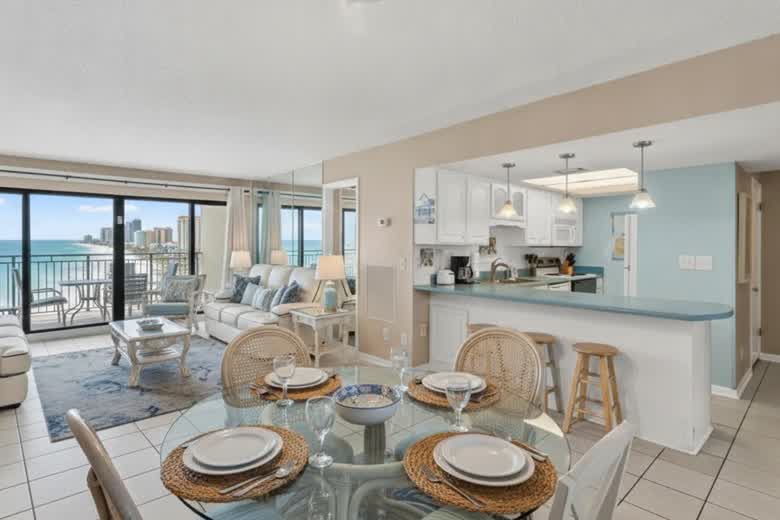
When comparing three bedroom condo rentals panama city beach visitors should look beyond the bedroom count. A good match gives each person a suitable place to sleep, enough room for shared routines, and a location that fits the plans of the group. This guide walks through a practical way to compare layouts, daily use, amenities, total charges, and rental terms before you choose.
Ask about a condo for your group
What should you decide before comparing rentals?
Start with the people and the trip, not a listing headline. Count overnight guests, note the ages and needs of the people traveling, and decide how much privacy the group expects. Three bedrooms can describe very different arrangements. The rooms might have different bed sizes, one may be smaller, or a listing may include a sleeping area outside the bedrooms. Only the individual listing can confirm those details.
Write down the non-negotiables before looking at options. A family with young children may need a bedroom near the adults. Three couples may care about bedroom privacy and bathroom access. A group with grandparents may want fewer stairs or a convenient route to shared areas. These needs are more useful than a vague goal such as “lots of space.”
- Guest count: Include every overnight guest and verify the rental’s occupancy limit.
- Sleeping arrangements: List who will share rooms and any bed-type requirements.
- Bathrooms: Think about how many people get ready at the same time.
- Shared routines: Consider meals, quiet time, games, and coming and going.
- Trip priorities: Rank beach access, resort facilities, kitchen use, and location.
- Dates and budget: Compare the same dates and guest count across options.
Separate must-haves from preferences. If every traveler treats a balcony view, a particular resort, and a specific bed type as essential, the search can become needlessly narrow. Agree on which requirements genuinely affect comfort or logistics, then use preferences to choose between the remaining options.
How can you tell if the bedroom layout will work?
Look for the exact bed configuration, not just the number of bedrooms. Record the bed sizes and where they are located. Check whether a sofa bed or bunk is part of the sleeping capacity, and whether that sleeping space is in a common room. A guest who sleeps in the living area may have less privacy and may need the room kept quiet earlier or later than others.
Try a simple room assignment before booking. For example, if two adults and two children travel with another couple, decide which bedroom each household will use and whether a child can share a bed comfortably. If the arrangement depends on a particular bed, confirm that it is in the unit and not merely suggested by a staged photograph. Do not infer capacity from photos or from another condo in the same building.
Consider the sequence of the day as well as bedtime. One early riser may want to make coffee without waking others. A child who naps may need a room that can be separated from the living space. A guest with a different schedule may value a bedroom door that provides privacy. Those small practical details can make a shared stay feel easier.
How many bathrooms and common areas does your group need?
Bathroom count alone does not tell the whole story. Find out whether bathrooms are private to a bedroom, shared from a hallway, or accessible through another room. When several people need to shower and get ready close together, access can matter as much as the number. If the listing does not explain the arrangement, ask directly.
Next, look at the common areas. A living room that seats only a few people may be less comfortable for a group that plans to spend evenings together. Check whether the dining table and seating seem adequate for the way you expect to eat. Photos can help show the space, while the written listing should explain features that pictures cannot confirm.
Think about the practical path through the unit. Can someone carry groceries from the entrance to the kitchen without disturbing people in the living room? Can beach items be set down without blocking the main walkway? Is there a place to gather while someone else cooks? These are not luxury questions; they help predict whether everyone can use the condo at the same time.
Which Panama City Beach location fits your group’s plans?
Begin with how your group expects to spend its days. If beach visits are the main event, review the property’s stated access and the route from the unit to the shore. If you plan to use resort facilities, confirm which amenities are available to guests at that specific rental and whether any conditions or charges apply. Do not assume that a feature shown in a resort photo is included with every unit.
Location also affects how the group handles different schedules. One person might want to return to the condo while others stay out. Someone may need a quiet break during the day. Ask whether the location and access arrangement work for those separate routines, rather than assessing only how close it looks to a single attraction.
For a destination-specific search, start with Panama City Beach condo rentals. If you want to compare different property types, review Panama City Beach vacation rentals, Panama City Beach resorts, and Panama City Beach vacation homes. Category pages help you browse, but check the individual property’s details for your dates.
For general destination context, the City of Panama City Beach area information provides local information. Use the current listing and rental terms for decisions about the actual accommodation.
Which amenities matter most in a three-bedroom condo?
Choose amenities by imagining an ordinary day in the rental. A kitchen may be useful for breakfast, snacks, or meals shared by the group. Laundry can be helpful during a longer stay or after beach days. A balcony can provide a separate place to sit. These features are valuable only if they fit what your group will use and the listing confirms they are present.
Check whether a feature is inside the unit or part of the resort. Ask about access, seasonal availability, operating hours, and any extra requirements when a particular amenity is important. A pool, fitness area, or beach service may have rules that differ by property or date. Confirm rather than assuming that a name or photograph answers every question.
Use the table below to compare options consistently. Fill in each column from the exact listing or a written answer from the rental provider. That helps prevent a strong impression from one photograph from outweighing a practical issue elsewhere.
| What to compare | Why it matters | What to verify |
|---|---|---|
| Bedrooms and beds | Guests need workable sleeping arrangements and privacy. | Bed sizes, room assignments, extra sleeping spaces, and maximum occupancy. |
| Bathrooms | Morning and evening routines may overlap. | Count, location, and whether access passes through a bedroom. |
| Living and dining space | Shared meals and downtime need usable space. | Seating, dining arrangement, and room layout shown in listing details. |
| Kitchen and laundry | These features can shape daily routines. | Which appliances or facilities are provided and whether they are in-unit. |
| Beach and resort access | Access affects how the group uses the location. | Route, included facilities, access terms, and any additional charges. |
| Policies and total charges | Terms and costs affect whether the stay fits. | Payment schedule, cancellation terms, taxes, fees, and deposits. |
How should you compare total cost and value?
Compare the full amount for the same dates, stay length, and guest count. A nightly rate is only one piece of the decision. Review the total presented during booking and identify any taxes, fees, deposits, or other charges listed separately. Do not estimate a total from a different unit or a different travel period.
Then compare the cost against the group’s priorities. A unit that fits the sleeping plan may reduce the need to rearrange rooms. A location that suits the group may make it easier to take breaks. An amenity that no one will use should not carry the same weight as one that supports a daily routine. Avoid assigning a dollar value to an amenity unless the provider gives you a clear basis for doing so.
For a useful comparison, make a simple worksheet with one row per candidate and columns for the total, included features, bed setup, bathroom setup, and policy terms. Mark unknowns instead of filling them with assumptions. If one total looks lower, check that the stay dates and included services are equivalent before deciding it is the better value.
What should you confirm about policies before booking?
Read the terms for the specific property and dates. Pay attention to payment deadlines, cancellation rules, check-in and check-out information, occupancy, and any restrictions that could affect your group. If a rule is unclear, ask before making a reservation. General policy pages are useful for orientation, but the terms tied to your booking are the ones to review.
Browse rental policies and the frequently asked questions for general booking information. If you are comparing a specific resort setting, the Aqua resort rental options offer one place to explore. Always confirm the selected unit’s own bed setup, availability, amenities, and terms.
Put important questions in one message so the answers are easy to review later. Be specific about your dates, number of guests, and the feature you need confirmed. For example, “Can you confirm the bed sizes in each bedroom for this unit?” is more useful than “Will it work for us?” Keep the reply with your reservation details.
- Can you confirm the permitted occupancy for our group and dates?
- What beds are in each bedroom, and are there any additional sleeping spaces?
- How many bathrooms are available and how are they accessed?
- Which amenities are included for this unit, and are any subject to conditions or extra charges?
- What is the full amount due and when are payments scheduled?
- What cancellation terms apply to this reservation?
- What should our group know about arrival, parking, or access?
How can you make a shortlist that is easy to use?
Limit the shortlist to options that meet your essential needs, then compare them using the same information. A compact table or shared note can keep the decision focused:
- Filter by dates and occupancy. Remove listings that are unavailable or cannot accommodate the group as stated.
- Check the sleeping plan. Assign guests to rooms and flag any uncertainty about beds or privacy.
- Review shared routines. Compare bathrooms, dining, living space, and the kitchen against what the group expects to do.
- Assess location and amenities. Identify which features matter most and verify their terms.
- Compare total charges and policies. Use equivalent dates and record unanswered questions.
- Choose only after clarifying essentials. Ask for written confirmation when a missing detail could change the decision.
For example, suppose two options both have three bedrooms, but one has a bed arrangement that suits the group and the other depends on an unconfirmed sofa bed. The first may be the more dependable choice even if the second appears attractive in photos. Conversely, if one candidate has a better location but the group expects to cook most meals, check whether its kitchen and dining setup meet that priority before deciding. The point is not to choose the feature-rich listing; it is to choose the listing that fits how your group will actually use it.
How do different groups evaluate the trade-offs?
A multigenerational family may put bedroom placement, bathroom access, and a comfortable shared area at the top of its list. One adult can handle breakfast while others wake gradually; later, guests can gather without everyone needing to stay in one bedroom. If an older relative has a mobility concern, ask about the unit’s access and route to shared facilities rather than assuming the building layout will be convenient.
Three couples may care most about a fair division of privacy. Compare bedroom sizes and bed types, then look at the bathrooms and shared seating. A room assignment that feels balanced to one couple might not work for another, so decide together before booking. If one room is materially different, it is better to acknowledge that early than to leave the assignment until arrival.
Friends with different schedules may need both a good gathering area and a way to rest separately. Check whether late-night conversation in the living area would disturb someone sleeping nearby, and whether early risers can move around without crossing a sleeping space. If the group plans outings, clarify how everyone will coordinate return times and access. The best plan is the one that handles ordinary differences without relying on everyone to follow the same schedule.
These examples are not a substitute for the property details. They show why the same three-bedroom label can lead to different decisions. Write down your group’s real scenario, then test each option against it. A concrete use case—who sleeps where, who cooks, and when people need quiet—makes a listing comparison much more reliable.
How can you prepare for arrival after choosing?
Once you have reserved a place, keep the booking confirmation, check-in instructions, and policy information where the group can find them. Share the address and arrival details with everyone who needs them. Decide who will handle groceries, who will coordinate arrival, and what the group should do if plans change. These small steps reduce last-minute confusion, especially when guests arrive separately.
Before departure, review the provider’s instructions for check-out and any property-specific expectations. Do not assume that one rental follows the same procedure as another. If the group has questions about access or arrival timing, ask the rental provider before travel rather than waiting until the day of check-in.
For broader trip ideas, browse the Panama City Beach travel guide and local activities and things to do. Keep the lodging decision anchored to the confirmed details for your chosen unit and dates.
What should a useful rental inquiry include?
A focused inquiry makes it easier to get a clear answer. Include your travel dates, guest count, and the reason a detail matters. If bed configuration is central, ask for the arrangement by room. If the group needs a particular amenity, ask whether it is available to guests in the selected unit and whether restrictions or charges apply. If cost is the concern, ask for the complete amount and payment schedule for the dates you are considering.
You can review the available property listings while preparing your options, then compare each candidate against your checklist. Avoid sending a broad request that asks the provider to choose for you; specific questions about confirmed facts help you make the decision.
Contact Sail Away Rentals about your dates
Frequently Asked Questions
Does a three-bedroom condo automatically fit six guests?
No. The permitted occupancy and sleeping arrangements depend on the individual rental. Check the listing’s stated limit and confirm it for your group before reserving.
Should we choose a condo, resort, or vacation home?
Compare the specific options by layout, location, amenities, total charges, and policies. Property type alone does not show whether the sleeping plan or shared spaces will suit your group.
What if the listing does not explain the bed arrangement?
Ask the rental provider to confirm the bed sizes and locations for the exact unit. Do not infer the arrangement from the bedroom count or from photos.
When should we verify amenities and charges?
Review them before completing a reservation. If an amenity or charge could change your plans, ask for clarification for the specific rental and dates.
The right three-bedroom condo is the one whose layout, location, amenities, and terms work for the people traveling, so confirm the details before you reserve.

 9902 South Thomas Drive