

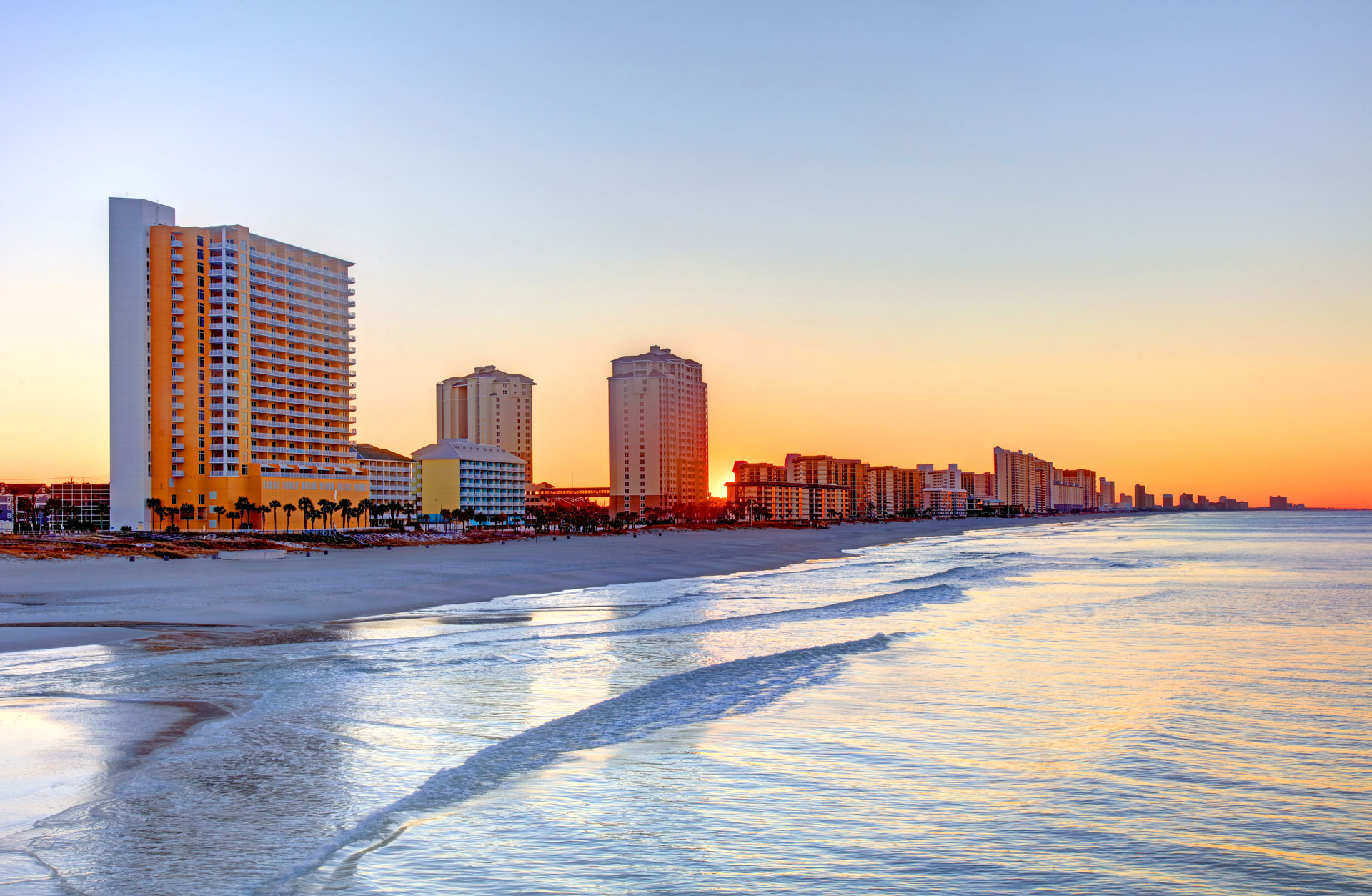
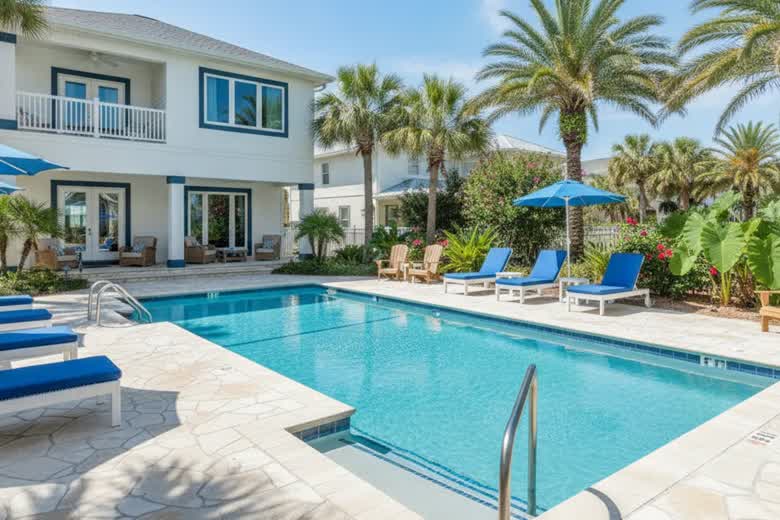
A pool can give a Panama City Beach getaway another place to relax between beach outings. But pool descriptions can mean different things: a pool may be reserved for one home, shared by guests at a resort, or located nearby without being part of the rental. Before choosing among private pool vacation rentals panama city beach options, confirm who can use the pool, when it is available, and what the rest of the stay includes.
What does a private pool mean for a vacation rental?
Start with access, not the photograph. In everyday listing language, a private pool usually means a pool for the occupants of a particular home or rental. A resort pool is a shared amenity, even if the rental is close to it or the guest has permission to use it. Some listings may mention a pool that is available only at certain times or subject to property rules.
Ask the manager to explain the exact arrangement for the address and dates you are considering. Is the pool exclusively for your group? Can residents, neighboring guests, or other visitors enter the pool area? Is access included in the stay, or does it require an additional step or fee? If the answer uses broad words such as “pool access,” ask what those words mean in practice.
Photos help you understand the setting, but cannot establish exclusivity, operating dates, or access rules. Read the amenity list and full description, then ask about details that are not explicit. Keep the answer with your booking information so everyone in the group has the same expectations.
Which pool setup fits your group?
There is no single best arrangement for every trip. Think about the way your group plans to spend its days. A private pool may appeal to guests who want pool time at their own rental without sharing the water with a larger resort crowd. A shared pool can suit travelers who like common amenities and do not need exclusive access. If your plans center on outings, a rental without a pool may still be a good fit.
| Setup | Questions to answer | May suit guests who |
|---|---|---|
| Private pool at a home | Is it exclusive? Is it open on your dates? What rules and safety features apply? | Want pool use at their own rental and value privacy |
| Shared resort pool | Who can enter? What are the hours, access steps, and seasonal arrangements? | Are comfortable sharing amenities and want a resort setting |
| No pool at the rental | How will the location and other planned activities shape each day? | Expect to spend much of the trip away from the property |
This is a comparison framework, not a promise that every home or resort has a particular feature. Verify the specific listing and your travel dates. A pool’s value also depends on how often your group expects to use it. If you plan to leave early for activities and return late, a pool may matter less than sleeping arrangements, parking, or location.
What should you ask about access and availability?
Use concise, property-specific questions before you reserve. A clear answer is more useful than assuming that a phrase in a headline covers every condition.
- Who may use the pool? Ask whether use is limited to your rental or shared with other guests or residents.
- Is it available throughout my stay? Confirm operating dates for your exact arrival and departure dates, and ask about planned maintenance or seasonal limits.
- What are the hours and rules? Ask about quiet hours, guest limits, food or glass restrictions, and any check-in or amenity-access process.
- Are there extra charges? Confirm whether the pool is included in the quoted stay and whether any access fee or required pass applies.
- What happens if access changes? Ask how the manager communicates a closure or maintenance issue and what booking terms apply. Review the rental terms rather than assuming a specific remedy.
Keep a short record of the answer, including the property name, dates, and any stated restrictions. If you are comparing several rentals, use the same questions for each one. This makes it easier to distinguish a genuine difference in access from a difference in wording.
What safety details should families confirm?
A pool should be treated as an active-supervision setting. Ask about the safety features at the specific property, such as a barrier, gate, or alarm, but do not assume that a feature is present or that it makes the pool childproof. Features and rules vary from one rental to another.
Before travel, agree on who will supervise children near the water and how adults will hand off that responsibility. Do not rely on one person to watch several activities at once. Set simple group rules, such as no running on wet surfaces and no entering the pool area without an adult. Make sure guests know how to contact the manager if they notice a problem with access or equipment.
For a family with young children, the pool’s location and access route also matter. Ask whether a door or gate separates the living area from the pool, and whether the pool area can be reached directly from the home. These questions help you plan supervision; they do not replace it. If a safety feature is essential to your decision, request a direct confirmation rather than inferring it from a photo.
How does location change the value of a pool?
Map your likely day rather than considering the pool in isolation. If the beach is the main event, think about how your group will travel between the rental and the shore, where you will park, and how you will carry chairs, towels, and food. If you expect relaxed days at the property, ask about the pool’s setting, seating, shade, and any limits on use.
Travelers can use the Panama City Beach travel guide and browse local activities and things to do while sketching out a flexible itinerary. Consider a simple example: a group plans a beach morning, lunch at the rental, and a quiet afternoon. A pool close to the home may be convenient during the break. A group that expects to be out for most of the day may prefer a different feature or a location that makes its activities easier.
Do not treat a destination name as proof of a particular distance or route. Review the map and property information, then ask the manager about any location detail that affects your plans. Keep a backup option for days when weather, beach conditions, or the group’s energy changes the schedule.
What else should you compare before choosing?
Pool access is one part of a stay, not a substitute for checking the whole rental. Confirm that the sleeping arrangements, number of bathrooms, kitchen and dining space, parking, and stated occupancy work for your group. For a multi-generational trip, consider whether people can rest at different times and whether shared rooms offer enough space for everyone to gather.
Compare Panama City Beach vacation homes with condo rentals. If shared amenities are acceptable, review resort options. You can also browse the broader vacation rental selection. In every case, inspect the individual property details; a home, condo, or resort label alone does not confirm a pool setup.
Compare the full booking details for the same dates and guest count. Review the rental policies and ask about terms you do not understand. Look at the total shown during booking, applicable fees, included amenities, cancellation terms, and any rules that matter to your group. A headline rate does not tell you whether one rental offers better value for your needs.
If you are still deciding, browse the Panama City Beach rental options and make a short list based on must-haves and preferences. A must-have might be a confirmed pool arrangement or enough sleeping space. A preference might be a particular outdoor setting. Separating the two helps your group avoid rejecting a suitable stay over a feature that is not essential.
How can you verify a pool listing step by step?
- Read the full property description. Find the wording about the pool and determine whether it refers to a private home amenity or shared facility.
- Check the amenity details and photos. Use them to understand the setting, but not as final proof of access or availability.
- Ask focused questions. Confirm exclusivity, dates, hours, rules, safety information, and any access steps or charges.
- Compare the entire stay. Check sleeping capacity, layout, location, policies, and total booking details alongside pool access.
- Save the response. Keep written confirmation with your reservation details and share relevant rules with the group.
When contacting the manager, include the dates, number of guests, and the exact property you mean. For example: “We are considering this home for July 10–15 with six guests. Is the pool reserved for this rental during those dates, and are there any access hours or rules we should know?” One clear message can resolve several uncertainties without requiring you to guess from listing language.
For general booking questions, consult the Sail Away frequently asked questions. For questions about a particular home or pool arrangement, ask before booking so that the answer applies to your stay.
How should you plan for arrival and pool use?
Once you have booked, turn confirmed details into a simple arrival plan. Save the address, check-in instructions, access information, and any pool rules where the trip organizer can find them. Share the relevant points with all adults in the group before arrival rather than relying on one person to explain them at the pool gate.
Pack for the type of stay you confirmed. If the property has a pool, bring the items your group normally uses for pool time, and check the listing for any restrictions that affect what you can bring into the area. Do not assume that towels, toys, or other supplies are provided unless the property information says so. For a shared pool, make sure each guest knows any required access procedure and the hours.
Build flexibility into the itinerary. A pool may be unavailable temporarily, weather may change outdoor plans, or the group may decide to spend more time exploring. Identify an indoor or off-site alternative that works for the group, and avoid making the pool the only planned activity. The goal is to choose a rental that works as a whole, even if one amenity is not used every day.
How can different groups evaluate the trade-offs?
Apply the same questions to the way your party actually travels. A family with young children may place a higher value on a pool they can reach without coordinating with a crowded common area, while also needing a clear plan for supervision. A group of adults who expects to spend most afternoons at the beach may care more about location, sleeping arrangements, and a straightforward return route. Neither pattern makes one pool type universally preferable; it changes which details deserve the most attention.
Try a simple decision exercise before browsing. Each traveler names one must-have and one nice-to-have. Then group the answers. If two people need quiet rest time and several others want to swim, check whether the rental layout and pool access let those plans coexist. If the whole party expects to swim together, ask whether guest limits or facility rules could affect that plan. Specific answers keep a headline amenity from crowding out practical needs.
For a longer stay, consider how often routines may shift. A pool might be most useful on a slow day, after an outing, or when some travelers choose to stay back. If the group has varied energy levels, ask whether everyone can enjoy the property without following one shared schedule. Conversely, if the itinerary is packed with planned outings, compare the pool with amenities you expect to use more often. The point is not to predict every hour, but to judge whether this feature serves the likely rhythm of the trip.
How should you compare total value without guessing?
Use a like-for-like comparison rather than relying on a single nightly figure. Enter the same travel dates and guest count for each option, then note the total presented, any listed fees, and the amenities that matter to your party. Do not assume that one setup costs more or less than another based only on the words “private” or “resort.” Rates and terms depend on the specific rental and dates, so verify the details shown for each candidate.
A practical shortlist can have three columns: confirmed pool arrangement, trip essentials, and remaining questions. For example, Rental A might have a confirmed shared pool and enough bedrooms, but an unanswered question about hours. Rental B might offer no pool but fit the group’s location and schedule well. Rental C might have a private pool but not enough sleeping space. This makes trade-offs visible and prevents an appealing photo from deciding the trip by itself.
| Comparison item | What to record | Why it helps |
|---|---|---|
| Pool access | Exclusive or shared, dates, hours, rules | Shows whether the advertised feature matches your plan |
| Group fit | Guest capacity, beds, bathrooms, shared space | Checks comfort beyond the pool |
| Booking details | Total shown, fees, policies, cancellation terms | Supports a fair comparison for the same dates |
| Daily routine | Likely outings, rest periods, travel logistics | Shows how much the amenity may be used |
Mark each item as confirmed, unclear, or unsuitable. Do not treat an unclear detail as confirmed simply because it seems likely. If two options look close, send the same short question to the manager for both. A consistent comparison is especially helpful when several people are weighing preferences from different angles.
What should a useful property inquiry include?
A focused message saves time for both the traveler and the person answering. Include the listing or property name, travel dates, guest count, and the exact detail you need. Ask one or more direct questions rather than a broad question such as “Does it have a good pool?” For instance, ask whether access is exclusive to the rental, whether it is available on each date, and whether guests need a pass or must follow posted hours.
Separate essential conditions from preferences. If exclusive use is essential, say so plainly and ask for confirmation. If you would be comfortable with a shared pool, ask who else may use it and what access process applies. You can also ask about any property-specific safety details you need to plan around. Do not rely on a general answer about a resort or neighborhood when the question concerns a particular rental.
After you receive an answer, check that it covers the dates and property you named. If it does not address a key point, follow up before booking. Save the response in the same place as the reservation confirmation, and share relevant rules with the other adults in the group. This record helps avoid confusion later, especially when the person making the inquiry is not the person organizing pool time.
How can you make a useful shortlist?
Begin with requirements that could rule out a rental: occupancy, sleeping arrangements, dates, and any essential access condition. Then compare preferences such as outdoor space, a private pool, a resort setting, or proximity to planned activities. This order makes the search easier to manage. A rental can be attractive and still fail a basic requirement, while another may meet the group’s core needs even if it lacks one optional feature.
Next, check each candidate at the property level. A category page helps you browse, but it does not establish the exact pool arrangement for a particular unit. Read the specific listing, inspect its amenity information, and contact the manager when something is unclear. Keep a short note beside each option so that the group is comparing confirmed facts rather than recollections of different listing pages.
Finally, revisit your shortlist after the group agrees on its daily plan. If most days include long outings, the pool may be a bonus rather than a deciding factor. If the group expects regular breaks at the rental, pool access may deserve more weight. The right choice is the one whose confirmed features, rules, and overall layout suit your plans—not necessarily the one with the most prominent pool photograph.
Frequently Asked Questions
Are all Panama City Beach rentals with pool access private?
No. Pool access may be exclusive to a home or shared as a resort amenity. Ask who can use the pool at the specific property.
Can I assume a private pool is open year-round?
No. Availability can vary by property, season, maintenance, or other conditions. Confirm access for your exact travel dates.
What should families ask about a rental pool?
Ask about access, operating dates, rules, and the safety features at that property. Plan active adult supervision around the water, and do not assume a barrier or other feature replaces supervision.
Is a private pool always a better choice than a resort pool?
Not necessarily. A private pool can offer exclusive use, while a shared pool may suit guests who prefer common amenities. Compare the pool arrangement with your itinerary, group needs, location, and total stay details.
What if the listing does not say whether the pool is private?
Ask the manager before booking and request a direct explanation of who has access. Save the response with your reservation details so the arrangement is clear to your group.
Contact Sail Away about your stay
Official water-safety guidance can help families prepare as well. The U.S. Consumer Product Safety Commission offers pool and spa safety information at Pool Safely, including reminders about supervision and barriers. Use that guidance alongside the property’s own rules and confirmed safety details, not as proof that any particular rental has specific features. Clear answers about pool access help you choose a rental that fits the way your group wants to spend its Panama City Beach visit. Confirm the property-specific details before you reserve, then plan the rest of your getaway with room to adjust.
 9902 South Thomas Drive