

Large group vacation rentals Panama City Beach planning starts with people, not a listing photo. Count every overnight guest, then match that number to the posted occupancy, the real beds, the bathrooms, and one shared living room. A four-bedroom condo that sleeps eight is a different stay from a six-bedroom house that sleeps sixteen. Both ads may still say "large group."
See large-group Panama City Beach rentals
What should you count before you look at large group vacation rentals Panama City Beach planning?
Write the guest list before you open a search filter. Include every adult, teen, and child who will sleep on site. Day visitors do not need a bed, but they still use the kitchen, the bathrooms, and the parking.
Sort sleepers into roles. Couples usually want a private bedroom. Solo adults often accept a twin or a bunk if they asked for it. Kids can share a bunk room when parents are fine with that. Grandparents and light sleepers usually need a door that closes.
Then note trip habits that change the floor plan:
- Early risers and late nights in the same unit need a bedroom away from the living room.
- A cook-at-home group needs counter space and a table that seats most people at once.
- Beach days with coolers, chairs, and wet towels need a drop zone that is not the only sofa.
A useful target is one private sleeping spot per couple or solo adult, plus a clear plan for every child. If the only way the group fits is three people on a sleeper sofa, keep looking.
Write the list in a note the whole group can see. Ask each household who shares a room and who will not. Guessing for cousins you have not heard from is how a "sleeps 14" condo becomes a sofa argument at 11 p.m. Update the note when someone drops. A smaller final group can move from a house back to a condo and skip baths you no longer need.
Separate overnight guests from people who only visit. A parent who joins for dinner does not need a bed. They still need a chair and, if they drive, a parking spot. Keep those names on a second line so you do not inflate the bedroom search and then under-plan the table.
How do you read occupancy before you trust the bedroom count?
Bedroom count is a layout clue. Occupancy is the legal cap for that unit. In Panama City Beach, vacation rentals must post the maximum occupancy from the city's vacation rental certificate. City Ordinance 1632 sets that cap from floor area. One- and two-family dwellings use 150 square feet of gross floor area per person. Other vacation rentals use 200 square feet per person, unless the fire inspector approves 150. The posted number is the one that matters, and the ordinance says ads must not overstate it.
Ask the manager for the posted maximum and for the bed list that adds up to it. A "sleeps 16" line with four bedrooms often hides two sleeper sofas, a bunk nook, and a den. That can be fine for cousins who expected it. It is a poor fit for four couples who each wanted a door.
Also ask what "sleeps" includes. Some counts add every twin in a bunk room. Others assume kids. Confirm ages if the house rules set a minimum for certain beds. Panama City Beach rentals that advertise a higher headcount than the certificate allow are not a planning shortcut. They are a risk on check-in night.
Read the city rule as a ceiling, not a target. Ordinance 1632 uses 150 square feet of gross floor area per person for one- and two-family dwellings. Other vacation rentals use 200 square feet per person unless the fire inspector approves 150 after an egress check. A compact condo can post a lower cap than its sofa beds suggest. If the certificate says 10, a listing that says 14 is not your plan. The same ordinance requires that cap, the responsible party's phone, and an evacuation map to be posted in the unit.
Outside city limits, do not borrow the city number. Unincorporated Bay County runs its own short-term rental registration and inspection program. Ask which jurisdiction the address sits in, then ask for that unit's posted maximum. The safe habit is the same in both places. Plan to the posted cap, and keep a bed list that does not invent extra sleepers.
How many bedrooms and bathrooms does the group need?
Use the guest roles from your list, not a generic "one bedroom per three people" rule. Couples need privacy. Friends sharing a reunion often accept bunks. A mixed group of both needs a hybrid: private rooms for couples and one bunk room for kids or teens.
| Overnight group | Bedroom shape that usually works | Bathrooms to confirm | Shared space to confirm |
|---|---|---|---|
| 6 to 8. Mostly one household. | 3 bedrooms, or 2 plus a bunk room. | 2 full baths. | One sofa group and a table for 8. |
| 8 to 12. Two or three households. | 4 bedrooms. At least 2 should close. | 3 baths. Or 2 if schedules are staggered. | Seating for everyone at once. |
| 12 to 16. Reunion or friend group. | 5 to 6 bedrooms. Assign bunks first. | 3 or more baths. | Living, dining, and kitchen in one open span. |
| 16 or more guests. | One house with 6 or more bedrooms. Or two coordinated condos. | At least 1 bath per 4 to 5 guests. | A table plus a sofa group, not one room only. |
Bathrooms fail before bedrooms do. Twelve people and two showers means a long line before beach time. Ask whether each bath is a full bath, and whether a "half bath" is only a powder room. A primary suite bath does not help the bunk room at 8 a.m.
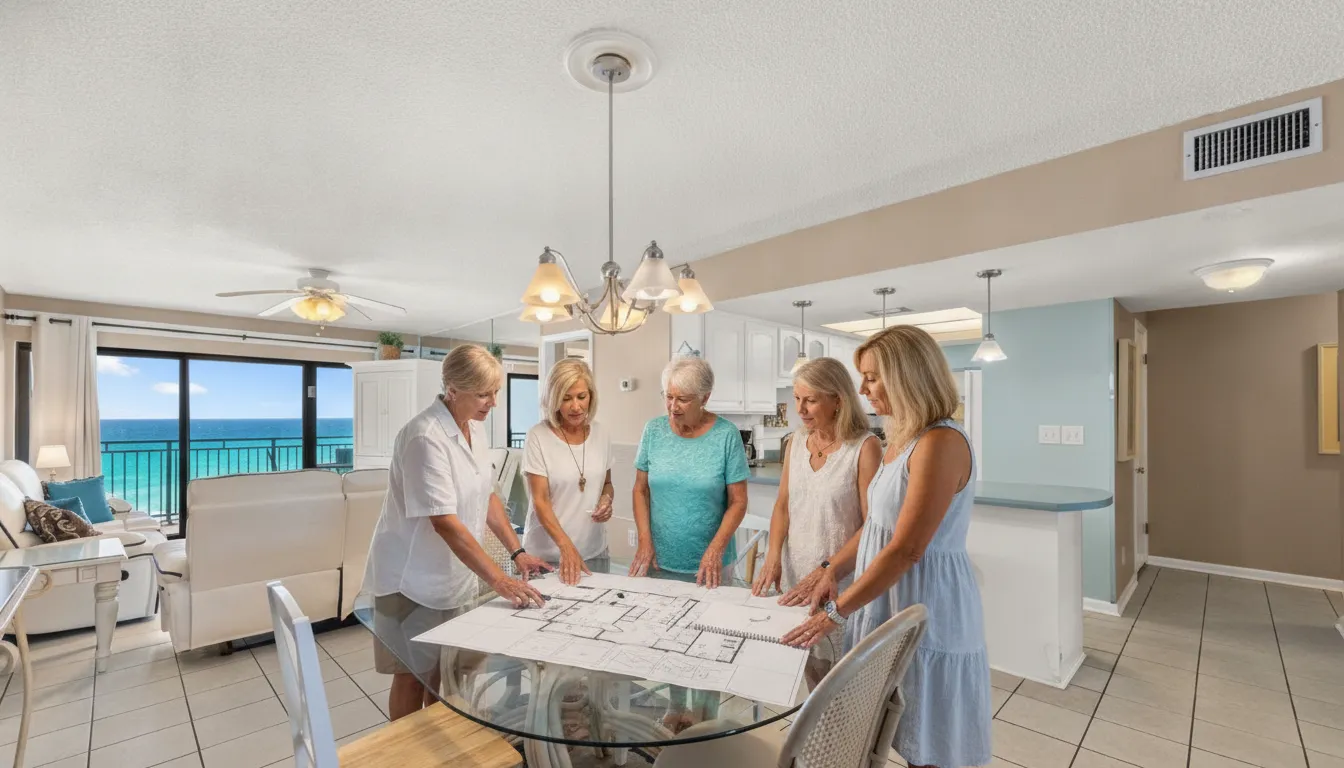
Assign rooms on paper before you assign people out loud. Give the quietest bedroom to light sleepers and anyone traveling with a baby. Put teens who stay up late farther from that room. If a bunk room opens straight into the living room, treat it as semi-private. It will not feel like a bedroom once the TV is on.
Check bed sizes, not just the room count. A bedroom with two twins is a kids' room unless a couple asked for it. A king plus a bunk can work for a parent and two kids. It is a poor plan for two adult couples. Write the bed size next to each name so the group sees the trade before anyone pays.
For a standard two- or three-bedroom condo, use the layout guides written for those floor plans. This planning pass is for groups that need more rooms than a typical beach condo provides. Sail Away's large-group collection includes homes and condos that sleep 10, 20, or more, including 6, 7, and 8-plus-bedroom houses. Match the certificate and the bed list to your roster before you fall for the highest "sleeps" number.
How much common space does a large group actually use?
Common space is where large stays break. Bedrooms can add up on paper while the only gathering spot is a sofa facing a TV. On a rainy afternoon, that is the whole trip.
Check four spots in every listing:
- Living room. Count seats, not square feet. If eight guests fit and you have fourteen, people will default to bedrooms and the group splits up.
- Dining table. A reunion that cooks needs chairs for most of the group. Bar stools do not replace a table.
- Kitchen. One fridge, one coffee maker, and a few feet of counter struggle past ten guests. Ask about a second fridge or space for a cooler.
- Entry and laundry. Wet swimsuits, coolers, and a pile of shoes need a place that is not the kitchen floor.
Condo towers and beach houses solve this differently. A condo may have a modest living room because the resort pool is the real gathering place. A house may have a big den and a smaller pool. Pick the version your group will use on a weather day, not the version that looks best in one photo.
Trace a normal day before you commit. Morning coffee, beach setup, lunch, showers, and a late card game each need a spot. If all five land in one small living room, the group will feel larger than the headcount. A balcony helps in fair weather. It is not a rain plan. Ask whether the dining table is separate from the sofa. Combined rooms look open in photos and feel tight once luggage is still out.
Sail Away's group page describes expansive living rooms, large dining tables, and open kitchens as the point of a group rental versus a block of hotel rooms. Hold the listing to that description. If the floor plan shows bedrooms along a hall and one tight great room, say so in your notes and keep comparing.
When should the group split into two rentals?
One roof is simpler until the layout stops fitting. Split the stay when any of these are true:
- The only floor plan that fits the headcount puts couples on sleeper sofas.
- You cannot get at least one full bathroom per four or five guests.
- Half the group wants a quiet house and half wants a resort pool.
- Parking, elevator rules, or stairs block part of the group.
Two coordinated condos can be the better plan. Put grandparents in a quieter three-bedroom unit and the louder crew next door or one floor away. You keep a shared pool deck and still give people a door to close. The tradeoff is two kitchens and a plan for who hosts dinner.
A single house is the better plan when the group wants one table, one grocery run, and one check-in. Sail Away lists both spacious condos and larger houses for reunions, retreats, and weddings. Use the bed list, not the headline, to choose.
If you split, book both units in the same resort when you can. Different buildings add a car ride between breakfast and the beach setup. Same-building neighbors can share chairs, a cooler, and a dinner plan without losing the evening to logistics.
Name the host unit before you reserve. The larger living room should hold dinner, even if grandparents sleep in the quieter condo. Put the grocery run and the coffee plan on that unit. The second kitchen can stay simple. Groups that skip this step buy two of everything and still eat on the floor.
Ask about the walk between doors, not just the resort name. Same floor beats a lobby meetup. Nearby buildings still work when both have a short walk to the same pool. Match the check-in times so half the group is not waiting in a hot parking lot.
How do Panama City Beach settings change the space you need?
Location changes how much indoor space you use. A beachfront tower pushes the day outside. A house on a quieter stretch pulls rainy hours indoors, so the living room has to work harder.
These Sail Away resort pages show the range. Read them as setting choices, then confirm the unit's own beds:
- Shores of Panama is a Gulf-front condo resort with a very large lagoon-style pool and a family resort feel. A smaller living room can still work if the group lives at the pool.
- Laketown Wharf is a large resort with five pools and a lakefront boardwalk, with beach access and nearby attractions. It suits groups who will spread out across the property.
- Grand Panama Beach Resort sits on the west end with direct beach access and on-site services aimed at families. Confirm bedroom mix inside the unit you want.
- Treasure Island offers Gulf-front condominiums near St. Andrews State Park, with a large seasonally heated pool, a hot tub, and a gazebo. It fits groups who want a park day and a simpler pool scene.
For a house with more bedrooms under one roof, start with Panama City Beach vacation homes. For a condo that keeps the group in a resort, start with Panama City Beach condo rentals. The Panama City Beach vacation rentals page is the broader inventory if you are still deciding between those two.
What should you ask before you reserve?
Send one note that lists people, not adjectives. Include overnight headcount, ages of kids, couples who need a private room, and anyone who cannot do stairs. Ask for five facts in writing:
- The maximum occupancy on the vacation rental certificate.
- A bed-by-bed list, including sofa beds and bunks, and who those beds are meant for.
- Full bathroom count, and whether any bath is private to one bedroom.
- How many can sit at the dining table, and whether the living room seats the full group.
- Parking spaces, elevator access, and any resort rule on extra guests or visitor parking.
Add the questions that match your group. Pet owners should check the pet policy on that unit, not a general resort note. A reunion with two cooks should ask about cookware and a second coffee setup. A group with a stroller or a wheelchair should ask about step-free entry, not just "elevator in the building."
Compare at least two layouts against the same list. The cheaper unit often drops a bathroom or swaps a bedroom for a den. That is an easy miss if you only compare nightly rates. If the answers are vague, ask again. A clear bed list is part of booking a group stay, not an extra favor.
Keep a one-page score for each finalist. Columns that matter are posted occupancy, private bedrooms, full baths, table seats, living-room seats, parking spaces, and stairs. A unit that wins on nightly rate and loses on baths is usually the wrong save. Share the score with the person collecting money so the group argues from the same facts.
After you choose, send the bed assignments with the trip note. People pack differently for a king room than for a top bunk. They also stop asking to add two more guests once they can see the certificate cap in writing. Sail Away can match a roster to homes and condos in the large-group collection once you send headcount, must-have private rooms, and whether you want one roof or two.
Ask Sail Away which layout fits your group
Frequently Asked Questions
How many bedrooms do we need for a large group in Panama City Beach?
Count couples and solo adults who want a door, then add a bunk or twin room only for people who agreed to share. Many groups of 8 to 12 need four bedrooms. Groups of 12 to 16 often need five or six. Confirm the posted occupancy before you treat a "sleeps" line as the plan.
Is a condo or a house better for a reunion?
Choose a condo when the resort pool and beach path are the main gathering spots. Choose a house when you need one big table, more bedrooms, and a living room that can hold a rainy day. Split into two condos if one unit cannot give couples real bedrooms.
What occupancy number should we believe?
Use the maximum on the Panama City Beach vacation rental certificate. City rules tie that cap to floor area and require it to be posted in the unit. Do not plan around an ad that claims more guests than that posted number.
How many bathrooms should a group of 12 have?
Aim for at least three full bathrooms, or about one full bath per four or five guests. Two showers for twelve people will bottleneck every morning. A powder room helps, but it does not replace a shower.
Can we book two condos instead of one large house?
Yes, when privacy, stairs, or bathroom count make one unit a poor fit. Book both in the same building if you can, and decide in advance which kitchen hosts dinner. You give up a single shared living room and gain quieter nights.
Bring the guest list, the bed list, and the posted occupancy to the same page. When those three match, the living room and the bathrooms are the last check. Then book the stay that fits the people you actually have.

 9902 South Thomas Drive