


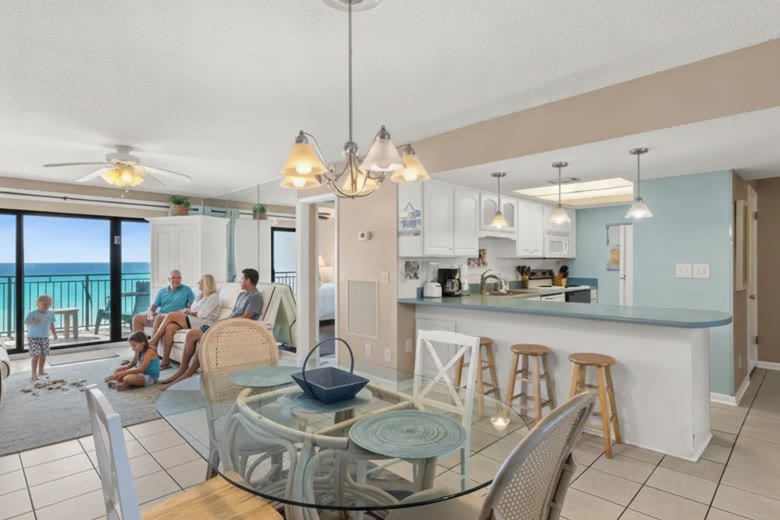
Destin beach house shared-space planning starts with more than counting beds. For a large family trip, the best fit gives everyone a place to gather, eat, and talk, while also making it easy to step away for quiet time. Before choosing a property, map out how your group will use each room during an ordinary day—not just how many people can sleep there.
What does shared space need to do for your group?
Start with the people traveling, then picture a full day together. A group with grandparents, parents, and young children may need a comfortable place for breakfast, an easy route between bedrooms and the main living area, and a quieter corner for a nap. A group of adults may care more about enough seats for meals, room to talk after dinner, and separate places to get ready.
Write down the moments that matter most. For example, everyone may eat breakfast at roughly the same time; a few people may return from the beach before the rest; children may need a calm place to unwind; and the group may want to sit together in the evening. This list gives you a practical way to judge a floor plan. It also helps you notice when a listing’s sleeping capacity sounds right but the shared rooms may not suit your group.
Do not assume that “sleeps” tells you how comfortable a home will feel. It describes sleeping arrangements, not how many people can sit together, move through the kitchen, or share a bathroom without waiting. Look at the room descriptions and photos as separate pieces of information. Ask about anything that affects your routine. A property can fit the headcount on paper while still feeling crowded during meals or when everyone is getting ready.
How can you map the day before comparing homes?
Make a simple schedule with the shared rooms your group will use. You do not need to plan every hour. The aim is to spot possible pinch points before choosing a layout.
- Morning: Who will make coffee or breakfast, and how many people may be in the kitchen at once?
- Getting ready: How many people need bathroom access during the same window?
- Time together: Does everyone expect to eat at one table, gather in one living room, or split into smaller groups?
- Rest and quiet: Will anyone need a nap, an early bedtime, or space away from the main activity?
- Evening: Will the group cook, order food, play games, or simply sit and talk?
Then mark the rooms or features that support those activities. A kitchen island can be useful for casual breakfast, but it may not replace a dining table for a full group. A large sofa looks inviting, but it may not seat everyone. A covered outdoor area can offer another place to gather, though it should not be counted as the only shared room if weather or mobility makes it hard for some guests to use.
Keep this schedule beside you as you compare houses. Sail Away has a general vacation homes page where you can review its home-rental category, but a category page alone does not confirm that a particular Destin property is available or has the layout your group needs. Verify the location and details for the property and dates you are considering. Do not assume every home has the same layout.
Which shared areas deserve the closest look?
Photos can help you understand a home, but each one shows a particular angle. Read the description as well, and compare the main gathering spaces against the number of people in your group. If a listing does not make a detail clear, ask before booking rather than filling in the gaps yourself.
| Shared area | What to assess | Question to ask |
|---|---|---|
| Living room | Seating, circulation space, and whether the main gathering area works for your group | How many guests can sit comfortably in the main living area? |
| Dining area | Table seating and whether there is another practical place for casual meals | How many seats are provided at the dining table? |
| Kitchen | Work surfaces, storage, and room for more than one person to help | What kitchen equipment and dining essentials are included? |
| Outdoor area | Access, shade, seating, and whether it suits the people who will use it | Which outdoor spaces are private to the home, and what seating is there? |
| Bedrooms and bathrooms | Sleeping arrangements, bathroom access, and distance from gathering areas | How are beds arranged, and how many full bathrooms are available? |
Use the table as a comparison tool, not as a substitute for property-specific information. Two houses with similar bedroom counts can feel very different if one has an open central gathering area and another separates the kitchen and living room. Neither arrangement is automatically better. The right choice depends on whether your family prefers to spend time together in one place or spread out.
Check for details that photos cannot settle. A wide-angle picture may make a room seem larger, and a dining table photographed without chairs pulled out can conceal how much space is available to move around it. Look for multiple views, read the written description, and ask how many people the table seats. If mobility, stairs, or a particular route through the home matters, ask for specifics instead of judging from an image.
How should you balance gathering space with privacy?
Shared time is easier when people can also take breaks. Think about who wakes early, who needs quiet in the afternoon, and whether anyone in the group has a different bedtime. A house with one central living room may suit a group that enjoys being together. A layout with more than one sitting area may work better if people want to read, watch a show, or chat in smaller groups at the same time.
Consider sound and movement, too. If bedrooms open directly onto a busy living area, ask how that arrangement might work for a child who naps or an adult who turns in early. If someone has limited mobility, look for the routes they will use most: entry to living space, bedroom to bathroom, and access to the dining area. Do not assume that a photo reveals steps, thresholds, or distances. Ask the property contact for the details that matter to your party.
Think through sleeping arrangements by name or household, not only by total headcount. Identify who needs a separate bed, who can share, and whether anyone needs a bedroom on a particular floor. Then check the listing’s bed configuration. A sofa bed or bunk arrangement may be suitable for some guests and not for others. Confirm what is actually provided rather than relying on a headline capacity figure.
For a multigenerational group, try a quick room-by-room exercise. Assign sleeping rooms based on mobility, bedtime, and who is traveling together. Then trace the route from each room to the kitchen, living area, and bathroom. This can reveal practical questions, such as whether someone must use stairs during the night or cross a busy common room to reach a bathroom. It is better to ask before booking than to discover the mismatch after arrival.
What should families check in the kitchen and dining area?
Meals often reveal whether a shared space fits. Decide how you expect to eat: cook most meals, prepare a few simple breakfasts, or use the kitchen mainly for snacks and drinks. The more people who plan to cook at once, the more important counter space and a workable flow become. For a group that eats together, table seating matters. For a flexible group, separate breakfast seating can be useful.
Check the listing for the kitchen equipment you rely on. If a particular appliance, serving dish, or child-friendly item is essential, ask whether it is available. Do not assume an item is included just because it is common in other holiday homes. If your party has dietary needs, plan meals with those requirements in mind and confirm what you need to bring.
Also picture the cleanup. Where will groceries go? Can people move between the refrigerator, counter, and table without crowding one another? Is there a place to set down bags when the group arrives? These small questions can make a busy arrival or shared meal feel more manageable. They are especially useful when several households are coordinating food and supplies.
One practical approach is to divide meal tasks before the trip. One household might plan breakfast, another can coordinate a grocery run, and someone else can bring items that are difficult to source after arrival. This does not require a detailed menu. It simply reduces the number of people trying to make decisions in the kitchen at once. If your plan depends on a specific appliance or cookware, confirm that item rather than assuming it is supplied.
How can you compare listings without guessing?
Use the same questions for every home, even when one listing has more photos or a longer description than another. Otherwise, it is easy to compare a confirmed feature in one property with an assumption about another. Write each answer in a simple grid, and label it as confirmed, not stated, or not a fit. That makes the trade-offs visible when family members have different priorities.
For example, one household may value a dining table where the whole party can sit, while another may prefer an extra place to relax after the beach. Mark each need as essential or flexible before browsing. A wide-angle room photo can give you a sense of layout, but it does not confirm measurements or a specific number of seats. Ask a direct question about any essential feature that remains uncertain.
It can also help to appoint one person to collect questions and share answers with the group. This avoids several relatives working from different versions of the property details. Keep the final shortlist small enough to compare carefully, and revisit the original listing before booking to make sure facts have not been mixed between properties. If a family member has a must-have requirement, put it at the top of the comparison list rather than relying on memory.
Create a short checklist for each property and fill it only with information the listing states or the manager confirms. Use “not stated” when you cannot find a detail. That keeps assumptions from quietly becoming part of the plan.
- Sleeping arrangements by room, including the type of each bed.
- Number and location of bathrooms, where provided in the listing details.
- Dining seating and living-room seating, if specified.
- Whether there is another indoor or outdoor area the group can use together.
- Stairs, entry conditions, or other access details that affect your party.
- Rules and amenities that matter to your plans, confirmed for the specific property.
- Any unanswered question you should resolve before completing a reservation.
Keep the comparison focused on how your family will use the home. A property with more bedrooms is not automatically the best choice if the shared space does not suit your plans. On the other hand, a compact common area may be fine for a group that expects to spend much of the day out and uses the home mainly for meals and rest. Choose based on the trip you are actually planning.
For broader browsing, Sail Away has pages for vacation rentals, vacation homes, condos, and resorts. These categories describe different kinds of stays; they do not confirm a particular home’s location, availability, capacity, or features. Review individual property information for the trip you have in mind.
What should you confirm before you book?
Before making a decision, line up the dates, guest count, and property details. Then do one final review as a group. Read the room descriptions aloud, compare them with your checklist, and ask the traveler most affected by each requirement to confirm whether the arrangement works. For example, the person who needs a quiet nap space can review bedroom placement, while the person coordinating meals can check the dining setup. This keeps one organizer from making assumptions on behalf of everyone.
Confirm the exact bed setup, the number of people the home may accommodate under its rules, and the shared-space questions that affect your group. Ask about any feature that is important but not clearly stated. If your plans depend on a specific arrangement, get the answer for that property in writing through the booking channel.
Review the applicable policies as well. Read the rental policies and the frequently asked questions, then check with the team if something is still unclear. For official information about Florida lodging and vacation-rental licensing, consult the Florida Department of Business and Professional Regulation. Availability and terms can vary by property and dates, so a general page should not replace confirmation of the details for your stay.
When the group has special requirements, raise them early. This includes accessibility questions, a specific bed arrangement, or a need to keep quiet and active spaces separate. A clear question helps the team point you toward accurate property information, while giving your family time to adjust expectations if a detail cannot be confirmed.
For ideas on organizing time beyond the house, explore the travel guide and things to do pages. Use those resources to shape your plans, then verify opening details and arrangements directly with the relevant provider. Keep the home’s layout and your group’s pace in mind when deciding how much to schedule.
Contact Sail Away with your group’s questions
Frequently asked questions
Is a beach house with more bedrooms always better for a large family?
No. Bedroom count helps you understand sleeping arrangements, but it does not tell you whether the group can gather comfortably or whether the layout suits your routine. Compare the living and dining areas, bathroom access, and the specific bed setup as well.
What if the listing does not show the number of dining seats?
Ask before booking if your group expects to eat together at one table. If the number of seats is not confirmed, do not assume the table will fit everyone. You can then decide whether another meal arrangement works for your family.
How do we plan for different bedtimes?
Identify who needs quiet or an early bedtime, then check where those bedrooms are in relation to the main gathering spaces. Ask about the layout if the listing does not make it clear. A second sitting area can help some groups, but confirm that the specific home has one.
Should we rely on the maximum guest count to judge comfort?
No. A stated occupancy limit is not a measure of how spacious the shared areas feel. Confirm the permitted guest count and evaluate seating, dining, kitchen, and sleeping arrangements separately.
A little planning helps your family choose a home around the way you want to spend time together, while making room for everyone’s different routines. Confirm the details that matter for your dates before you book, and keep your checklist handy as you compare options.

 9902 South Thomas Drive